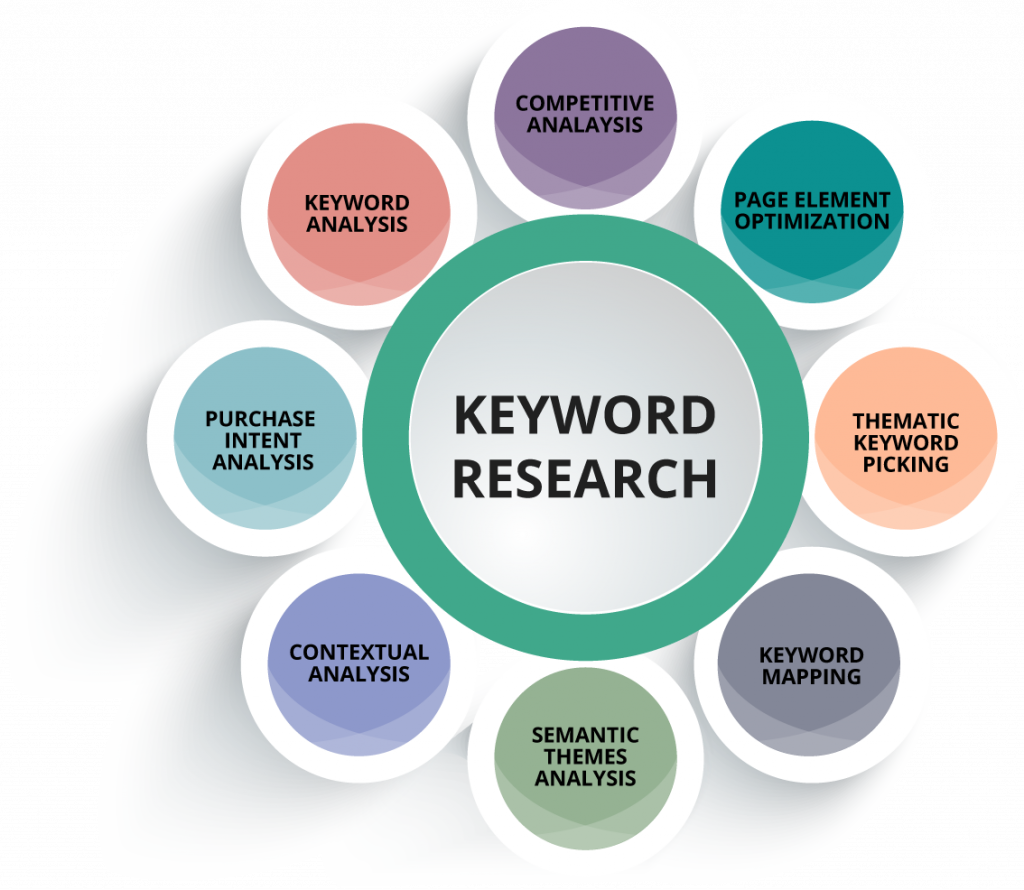
Keyword research continues to be the foundation of every successful SEO and digital marketing campaign in 2026. Whether you are planning to run an organic SEO campaign or a paid advertising strategy, identifying the right keywords determines your ability to attract the right audience, generate traffic, and drive meaningful conversions.
However, keyword research today is far more advanced than it was a few years ago. Search engines like Google have evolved significantly with the integration of artificial intelligence, machine learning, and natural language processing. These advancements allow search engines to understand not only the exact words users type but also the intent, context, and behavior behind those searches.
In 2026, keyword research is no longer just about targeting high-volume keywords. It is about understanding user intent, semantic relevance, conversational queries, and search journey mapping. Additionally, the rise of voice search, AI-generated answers, and zero-click searches has transformed how users interact with search engines.
For example, instead of typing “best SEO tools,” users may now ask voice assistants, “What are the best SEO tools for beginners in 2026?” This shift emphasizes the importance of long-tail and conversational keywords.
Moreover, businesses must consider the entire customer journey—from awareness to decision-making—when conducting keyword research. By aligning keywords with different stages of the funnel, marketers can create highly targeted content that meets user needs at every step.
This guide will walk you through a complete, step-by-step keyword research process tailored for 2026, helping you build a powerful SEO strategy that delivers long-term results.
Keywords are the words and phrases that users enter into search engines to find information, products, or services. In 2026, keywords have evolved into a broader concept that includes:
Search engines now rely heavily on semantic understanding, meaning they can interpret the relationships between words and concepts. For instance, Google understands that “digital marketing agency” and “online marketing company” are closely related.
This means content creators must shift their focus from keyword stuffing to topic-based optimization. Instead of targeting a single keyword repeatedly, you should create content that covers an entire topic comprehensively.
Additionally, keywords are influenced by personalization factors such as user location, search history, and device type. This makes it important to create flexible content strategies that can adapt to different user contexts.
Keyword research is essential because it connects your content with what users are actively searching for. Without it, even the most well-written content may fail to generate traffic.
In 2026, keyword research plays a crucial role in:
It also helps businesses avoid common mistakes, such as targeting keywords with no search demand or high competition without proper resources.
Furthermore, keyword research supports a multi-channel approach. Users now search across various platforms, including search engines, voice assistants, social media, and video platforms. Understanding these behaviors allows businesses to create integrated marketing strategies.
Another important aspect is aligning keywords with business goals. Not all keywords are valuable—some may drive traffic but not conversions. By focusing on high-intent keywords, businesses can attract users who are more likely to take action.
Ultimately, keyword research is not just about rankings—it is about delivering the right content to the right audience at the right time.
Generating keyword ideas is the first practical step in the keyword research process. In 2026, this involves combining traditional methods with modern AI-driven techniques.
Seed keywords are the basic terms that define your business or niche. These keywords serve as the foundation for generating more advanced keyword ideas.
To identify seed keywords:
Seed keywords help keyword research tools generate hundreds or even thousands of related keywords. They also provide a starting point for understanding your niche and competitors.
Competitor analysis is one of the most effective ways to find proven keyword opportunities. By studying what your competitors rank for, you can identify:
In 2026, competitor analysis goes beyond basic keyword tracking. It includes analyzing:
This helps you create content that is not only competitive but also superior in quality and relevance.
Modern keyword research tools provide valuable insights that go beyond search volume. These tools now offer features such as:
Popular tools include Google Keyword Planner, Google Trends, Ahrefs, SEMrush, and Ubersuggest.
Using multiple tools ensures more accurate data and helps you uncover hidden opportunities.
User-generated platforms such as forums, Q&A sites, and social media groups are excellent sources of keyword ideas. These platforms reveal real user concerns and questions.
By analyzing these discussions, you can:
This approach helps you create content that directly addresses user needs, improving engagement and relevance.
Artificial intelligence is transforming keyword research by providing predictive insights and automation. AI tools can:
By integrating AI into your workflow, you can stay ahead of competitors and create more effective SEO strategies.
Once you have a list of keyword ideas, the next step is to analyze them to determine their value and potential.
Search Volume
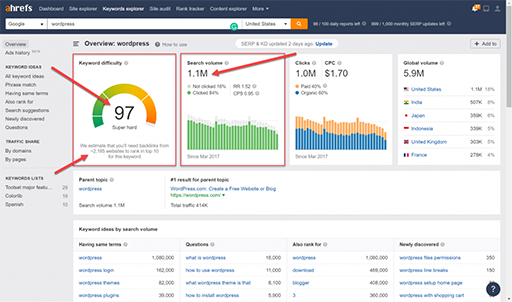
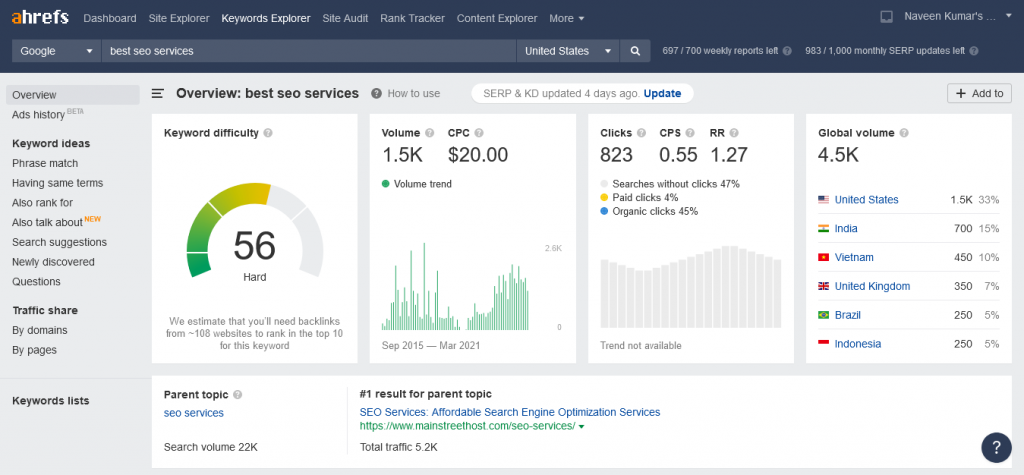
Search volume indicates how often a keyword is searched. While high-volume keywords can drive more traffic, they are often more competitive. It is important to balance volume with relevance and intent.
Click-Through Potential
Not all searches result in clicks. Many users get answers directly from search results through featured snippets or AI-generated summaries. Evaluating click potential helps you focus on keywords that are more likely to drive traffic.
Traffic Potential
Instead of focusing on a single keyword, consider the total traffic a page can generate by ranking for multiple related keywords. This aligns with modern topic-based SEO strategies.
Keyword Difficulty
Keyword difficulty measures how hard it is to rank for a keyword. It depends on factors such as competition, domain authority, and content quality. Choosing the right difficulty level ensures realistic goals.
Cost Per Click (CPC)
CPC indicates the commercial value of a keyword. Keywords with higher CPC often have higher conversion potential, making them valuable for business-focused content.
Search Intent
Search intent is the most important factor in keyword analysis. It determines what users expect to find when they search for a keyword.
Types of intent include:
Aligning your content with the correct intent improves both rankings and user satisfaction.
Here are your expanded, detailed, and 2026-optimized versions of the requested topics. Each section is now significantly enriched with deeper insights, practical strategies, and modern SEO approaches.
Targeting keywords effectively in 2026 is no longer about simply inserting keywords into content. It is about building a strategic, intent-driven content ecosystem that aligns with how search engines interpret topics and how users consume information. With advancements in AI and semantic search, Google now evaluates content based on relevance, depth, and user satisfaction rather than keyword density.
Modern SEO relies heavily on topic clusters, where a central pillar page is supported by multiple related subtopics. Instead of creating separate pages for each keyword, group related keywords into a single comprehensive topic. This improves internal linking, strengthens topical authority, and helps search engines understand your expertise.
For example, instead of targeting “keyword research tools,” “best keyword tools,” and “SEO keyword tools” separately, you can create one in-depth page covering all variations.
Understanding search intent is the most critical factor in keyword targeting. Every keyword reflects a specific user goal, such as learning, comparing, or purchasing. If your content does not match that intent, it will struggle to rank even with proper optimization.
Types of intent to consider:
Analyze the current top-ranking pages to understand what type of content Google prefers for a keyword.
In 2026, search engines focus on entities and context rather than exact-match keywords. This means you should include:
This approach helps search engines understand your content more comprehensively and improves ranking potential across multiple keyword variations.
To maximize visibility, structure your content for:
Formatting plays a key role. Use headings, bullet points, and short paragraphs to improve readability and indexing.
Keyword placement should feel natural and strategic. Focus on:
Avoid keyword stuffing, as it negatively impacts user experience and rankings.
Google favors content that demonstrates expertise. Ensure your content:
The goal is to create content that becomes a complete resource, reducing the need for users to visit other pages.
Keyword prioritization is a critical step that determines how efficiently you use your time, resources, and content efforts. In 2026, businesses must move beyond basic metrics and adopt a strategic, ROI-driven approach to keyword selection.
Not all keywords are valuable for your business. A keyword may have high search volume but low relevance to your services. Always prioritize keywords that align closely with your offerings and target audience.
For example, informational keywords may drive traffic, but transactional keywords often drive conversions.
Keywords should be evaluated based on their ability to generate leads or sales. High-intent keywords, such as “buy,” “hire,” or “best service,” typically have better conversion rates.
Understanding the user’s position in the buying journey helps you prioritize effectively:
Highly competitive keywords may take significant time and resources to rank. Instead, focus on:
These keywords often provide quicker wins and help build authority over time.
Consider the potential return on investment for each keyword. Ask:
Prioritize keywords that offer the best balance between effort and reward.
Instead of always creating new content, analyze your existing pages. Identify keywords where you already rank on page 2 or 3 and optimize those pages to improve rankings.
Updating content can be more efficient than starting from scratch and often delivers faster results.
In 2026, keyword prioritization should be backed by data. Use analytics tools to track:
This allows you to refine your strategy continuously and focus on what works best.
Create a structured plan that includes:
A well-defined roadmap ensures consistent growth and better resource management.
Keyword research tools are essential for collecting, analyzing, and refining keyword data. In 2026, these tools have evolved significantly, offering advanced features powered by AI and machine learning.
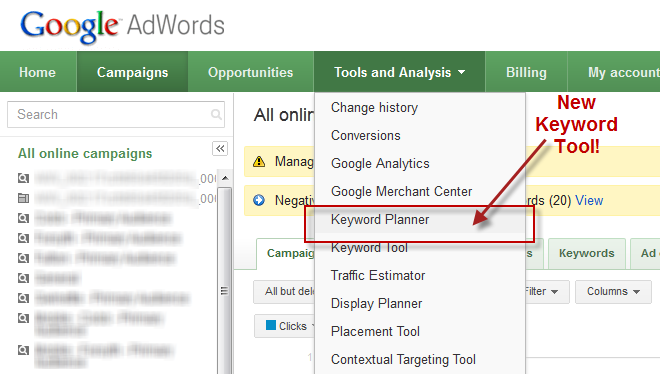
Google Keyword Planner remains a foundational tool for keyword research. It provides:
It is especially useful for both SEO and PPC campaigns.
Google Trends helps identify trending topics and seasonal patterns. It allows you to:
This is particularly useful for content planning and staying ahead of market shifts.
Google Search Console provides real performance data from your website. It shows:
This data is invaluable for optimizing existing content and identifying new opportunities.
Ahrefs is a powerful SEO tool that offers:
It is widely used for in-depth keyword and competitor research.
SEMrush provides a comprehensive suite of SEO tools, including:
Its advanced features make it suitable for both beginners and professionals.
In 2026, AI tools play a major role in keyword research. These tools can:
AI tools save time and provide deeper insights compared to traditional methods.
Tools like keyword generators and browser extensions help you quickly find keyword ideas while browsing. They are useful for:
No single tool provides complete data. Combining multiple tools ensures:
For example, you can use Google tools for baseline data and platforms like Ahrefs or SEMrush for deeper insights.
Keyword research is not a one-time task. Regularly monitor your keyword performance and update your strategy based on:
This ensures your SEO strategy remains effective in a constantly evolving digital landscape.
Keyword research in 2026 is a dynamic and evolving process that requires a deep understanding of user behavior, search intent, and AI-driven algorithms. Businesses must adopt a holistic approach that combines traditional SEO practices with modern innovations.
By focusing on intent, leveraging advanced tools, and creating high-quality content, you can build a powerful keyword strategy that drives long-term success.
Keyword research is not just about rankings—it is about connecting your business with the right audience and delivering value through relevant content.
Keyword research is the process of identifying and analyzing the search terms users enter into search engines to create relevant and optimized content that drives traffic and conversions.
It helps align content with user intent, improves visibility in AI-driven search results, and ensures businesses attract the right audience instead of just traffic.
Long-tail keywords are longer, more specific search phrases with lower competition and higher conversion potential, often used in voice and conversational searches.
Keyword research now focuses on user intent, semantic search, AI-driven insights, and topic-based optimization rather than just exact-match keywords and search volume.
Search intent refers to the purpose behind a user’s query, such as learning information, comparing options, or making a purchase.
Start with seed keywords, analyze competitors, use keyword research tools, explore user communities, and leverage AI tools to discover relevant opportunities.
Popular tools include Google Keyword Planner, Google Trends, Google Search Console, Ahrefs, SEMrush, and AI-powered keyword tools.
Keyword difficulty is a metric that estimates how hard it is to rank for a keyword based on competition, backlinks, and content quality.
No, it is better to balance high-volume keywords with low-competition and long-tail keywords to achieve faster and more sustainable results.
Focus on business relevance, search intent, competition level, and conversion potential to select the most valuable keywords.
A topic cluster is a group of related content pieces linked to a central pillar page, helping improve site structure and topical authority.
Keyword research should be reviewed regularly, ideally every few months, to adapt to changes in trends, competition, and search behavior.
Naveen Kumar serves as the Head of Marketing at JDM Web Technologies and brings over 15 years of expertise in digital marketing. As a Woorank Digital Marketing Expert, Google Analytics Certified, Google Ads Certified, and Bing Ads Accredited professional, he leads a talented team committed to delivering measurable results. Under his leadership, JDM Web Technologies has earned a reputation as a top SEO company, providing comprehensive digital marketing solutions, including SEO, SMO, PPC, Local SEO, Website Design & Development, and Online Reputation Management—all conveniently offered under one roof.
TOP